








here comes copyright
How much caffeine is in coffee?
Numerous studies show that caffeine is able to increase athletic endurance performance and improve concentration and attention in decisive phases of a competition. Renowned institutions from the world of sports nutrition (Australian Institute of Sport, Swiss Sports Nutrition Society) therefore list caffeine in class A, which corresponds to a supplement with the highest level of evidence. The form in which caffeine is taken - whether as coffee, tea, espresso, cola, powder, shot, booster, chewing gum, energy drink, etc. - plays a subordinate role. For athletes, the dosage and the individual tolerance and effect of caffeine are of primary importance.
The Swiss Sports Nutrition Society estimates the following dosages to be appropriate for sports:
• 3-6 mg per kg body weight 1 h before exercise
• 3-6 mg per kg in doses of 0.3 - 1.0 mg per kg body weight distributed over the entire duration of the competition (e.g. 50 mg for 75 kg persons = 0.7 mg/kg every 1-2 h)
• 1-2 mg per kg body weight at the latest 30 min before the end of the competition
How much caffeine is contained in coffee?
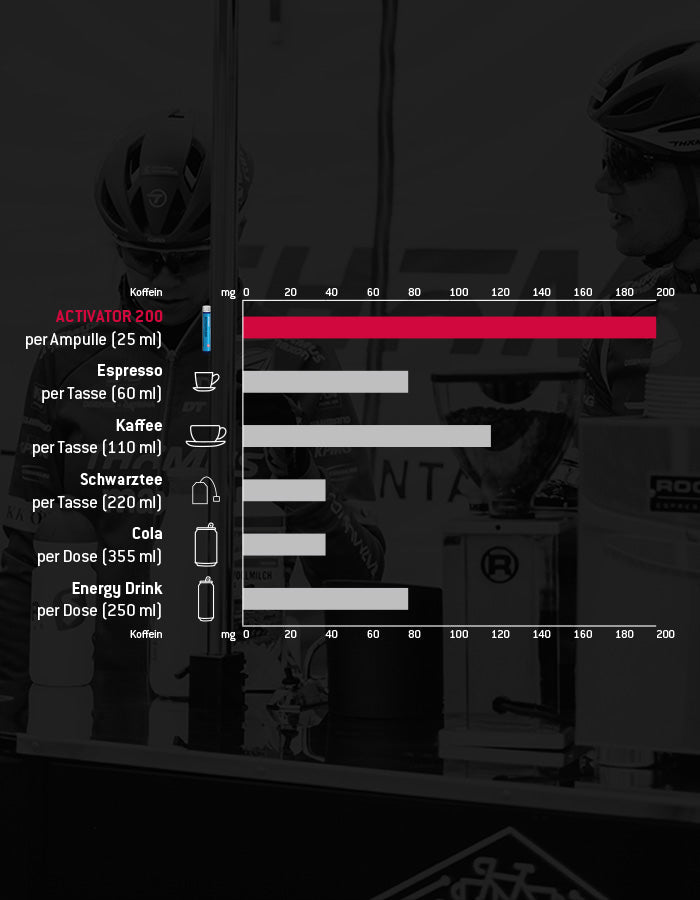
Assuming a female or male athlete of 60 kg body weight as an example, this would mean: Take approx. 180-360 mg of caffeine one hour before the start of the competition. How many cups of coffee or espresso will yield this dose can only be roughly estimated: the caffeine content, the type of coffee, the brewing technique and the amount of liquid in the drink vary too much.
A study by Ben Desbrow et al. in Queensland (Australia), for example, analysed 97 different espresso drinks. The average caffeine content per serving was 106 mg. The measured range was astonishing, revealing a caffeine content between 25-214 mg per cup (1). Another study by the same author showed that an espresso from the same Starbucks outlet can contain between 63-91 mg of caffeine depending on the time (2).
Conclusion for athletes
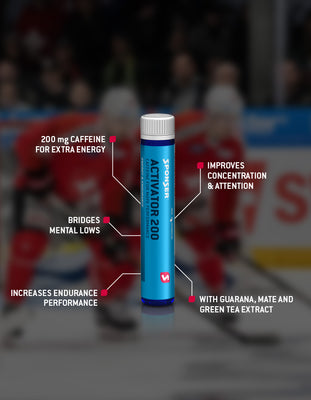
Those who cover their caffeine needs in training and competition with caffeine shots such as ACTIVATOR 200 from the Swiss sports nutrition manufacturer SPONSER® know exactly how many milligrams of caffeine are ingested (namely 200 mg). In addition, caffeine boosters like ACTIVATOR 200 are practical to use, handy to use and versatile in taste.
Literature
1) Desbrow B. et al. (2007): An examination of consumer exposure to caffeine from retail coffee outlets, in: Food Chem Toxicol. 2007 Sep;45(9):1588-92.
2) Desbrow B. et. al (2012): An examination of consumer exposure to caffeine from commercial coffee and coffee-flavoured milk, in: Journal of Food Composition and Analysis. Vol. 28(2) 2012:114-118.